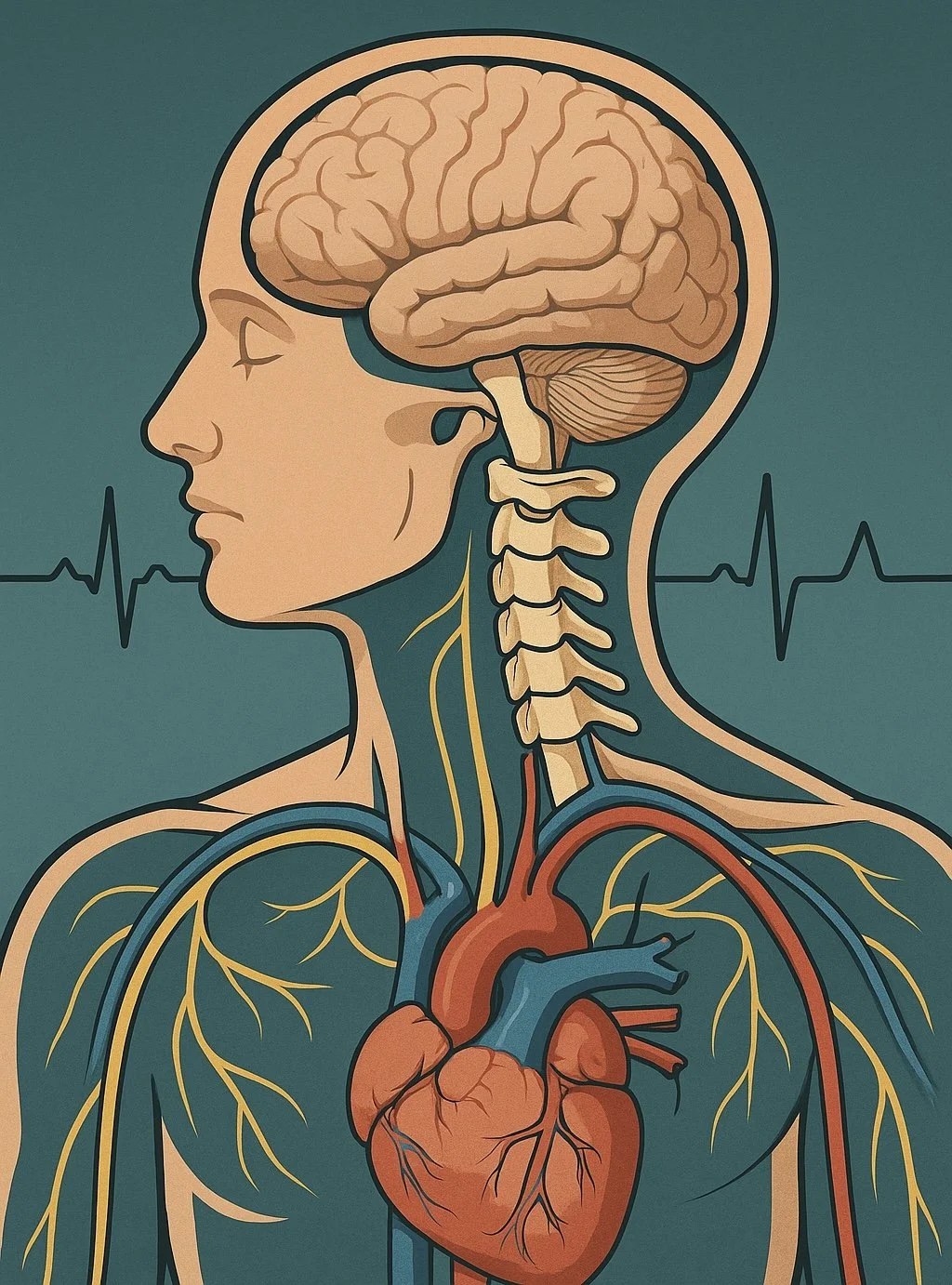
POTS & the Atlas
What Most People Don’t Hear About POTS
POTS (Postural Orthostatic Tachycardia Syndrome) is usually explained from a symptoms-only perspective: fast heart rate when standing, dizziness, fatigue, and intolerance to being upright.
But deeper down, POTS is a regulation issue.
And regulation is the job of the nervous system—specifically the brainstem and the autonomic centers that live right at the upper cervical spine.
That’s why understanding the atlas matters.
Why the Atlas Is Central to Autonomic Control
The atlas (C1) sits around the brainstem like a ring. When it misaligns, it doesn’t “pinch” anything—instead, it distorts the communication pathways that tell the body how to manage:
Heart rate
Blood vessel tone
Blood pressure shifts
Balance and spatial orientation
Muscle control needed to stay upright
A subluxated atlas can create neurologic noise, making it harder for the brainstem to coordinate these systems. Think of the brainstem as the body’s “autopilot.” If the atlas is out, the autopilot is flying through static.
How Upper Cervical Subluxation Can Influence POTS-Like Patterns
1. Disturbed Baroreceptor Signaling
Baroreceptors track pressure changes in the arteries. Their information routes through the brainstem.
If atlas mechanics are off, the brainstem may misinterpret:
“How much pressure do we have?”
“Are we upright?”
“Do we need to raise heart rate?”
This can create the overreaction often seen in POTS.
2. Altered Muscle Spindle Input from the Suboccipitals
The muscles under the skull are packed with sensors. If the atlas shifts, these sensors fire inaccurate data about head position, balance, and orientation.
That distorted input can trigger:
Dizziness
Instability
Sensitivity to standing
Fatigue from constant compensation
3. Restricted CSF & Vascular Flow Dynamics
Upper cervical tension can influence how fluids move through this area—especially cerebrospinal fluid around the brainstem. When this flow becomes inefficient, the nervous system enters “work harder” mode, and regulation suffers.
4. Sympathetic Overdrive
The body may shift toward a stress-dominant state when upper cervical interference is present.
This often looks like:
Racing heart
Poor temperature control
Trouble standing
Feeling “wired but tired”
That pattern is commonly labeled as POTS.
What Upper Cervical Chiropractic Does
Upper cervical chiropractic doesn’t diagnose or treat POTS. It does one thing with precision:
Locate, analyze, and correct vertebral subluxations—especially at the atlas.
By restoring normal mechanics and reducing interference at the brainstem, the body has a clearer pathway to regulate itself. You’re not forcing regulation. You’re removing the thing that distorts it.
The Takeaway
POTS may show up as heart rate spikes and dizziness, but its roots often involve how well the nervous system can adapt to gravity, posture, and pressure changes.
Correcting the atlas restores clarity to the brainstem’s signals—the foundation of autonomic control. When interference is removed, the body doesn’t need chasing symptoms. It simply returns to doing what it was designed to do: regulate, balance, and heal from the inside out.